Indonesia + Southeast AsiaOnline or by appointment
Menu
Drilling rig and geotechnical team at an urban borehole investigation site.

Fault Marker

Geotechnical site investigation

Decision-makers who need scoped specialist evidence.

Region
Indonesia + Southeast Asia
Delivery
Online or by appointment
Prepare a preliminary engagement brief

Services

Choose the evidence path that matches the project decision.

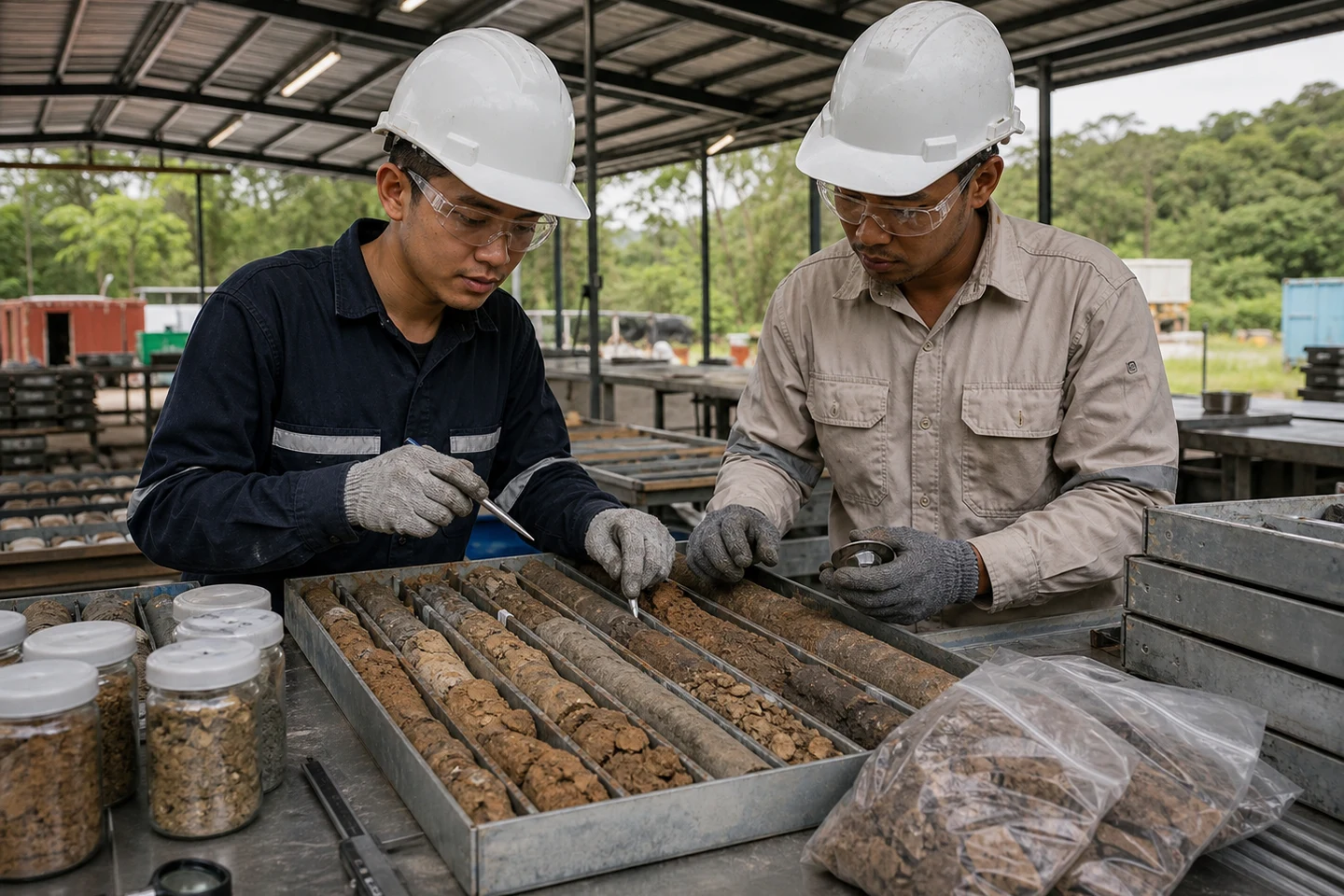
Two field technicians inspect core trays and specimen jars at a covered logging station.

Applications

Evidence tailored to the operating context.

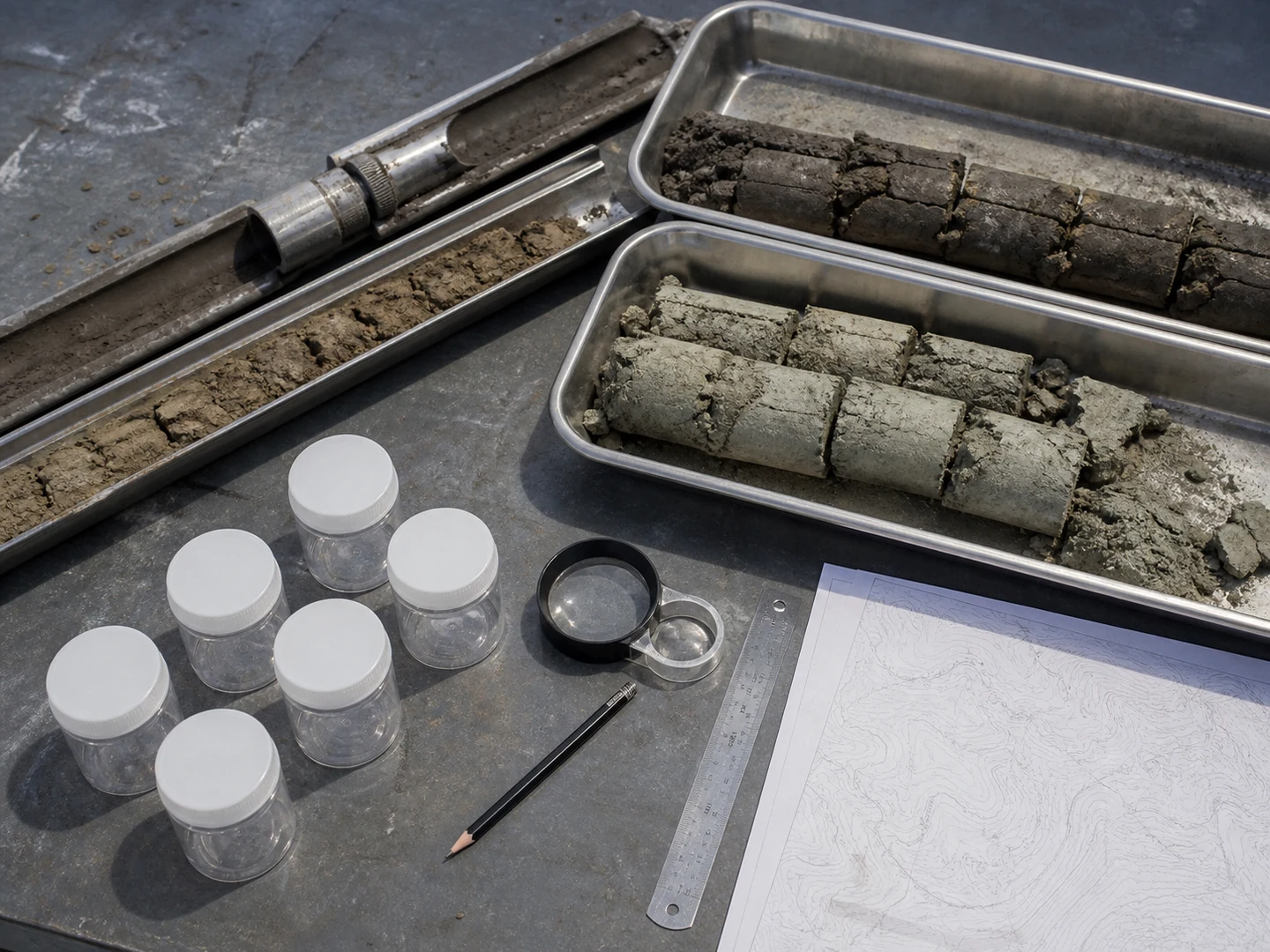
Split-spoon sampler, soil specimens, blank jars, and survey tools arranged for logging.
Applications
BLD

Buildings and basements

Foundation concept, settlement compatibility, excavation and groundwater approach

LIN

Road and rail corridors

Earthworks, pavement support, local instability, and drainage

IND

Industrial sites

Heavy equipment support, fill history, utility routes, and staged construction

SLP

Slopes and retaining systems

Geometry, drainage, monitoring, and intervention sequence

Evidence

Project evidence stays reviewable from source to decision.

PositionSurvey reference, ground level, access condition, and location confidence.
SequenceDepth intervals, recovery, drilling response, groundwater observations, and interruptions.
SpecimenSample type, condition, preservation, custody, and test selection.
LimitCoverage, timing, access, disturbance, correlation, and unobserved conditions.
Inspect evidence structure
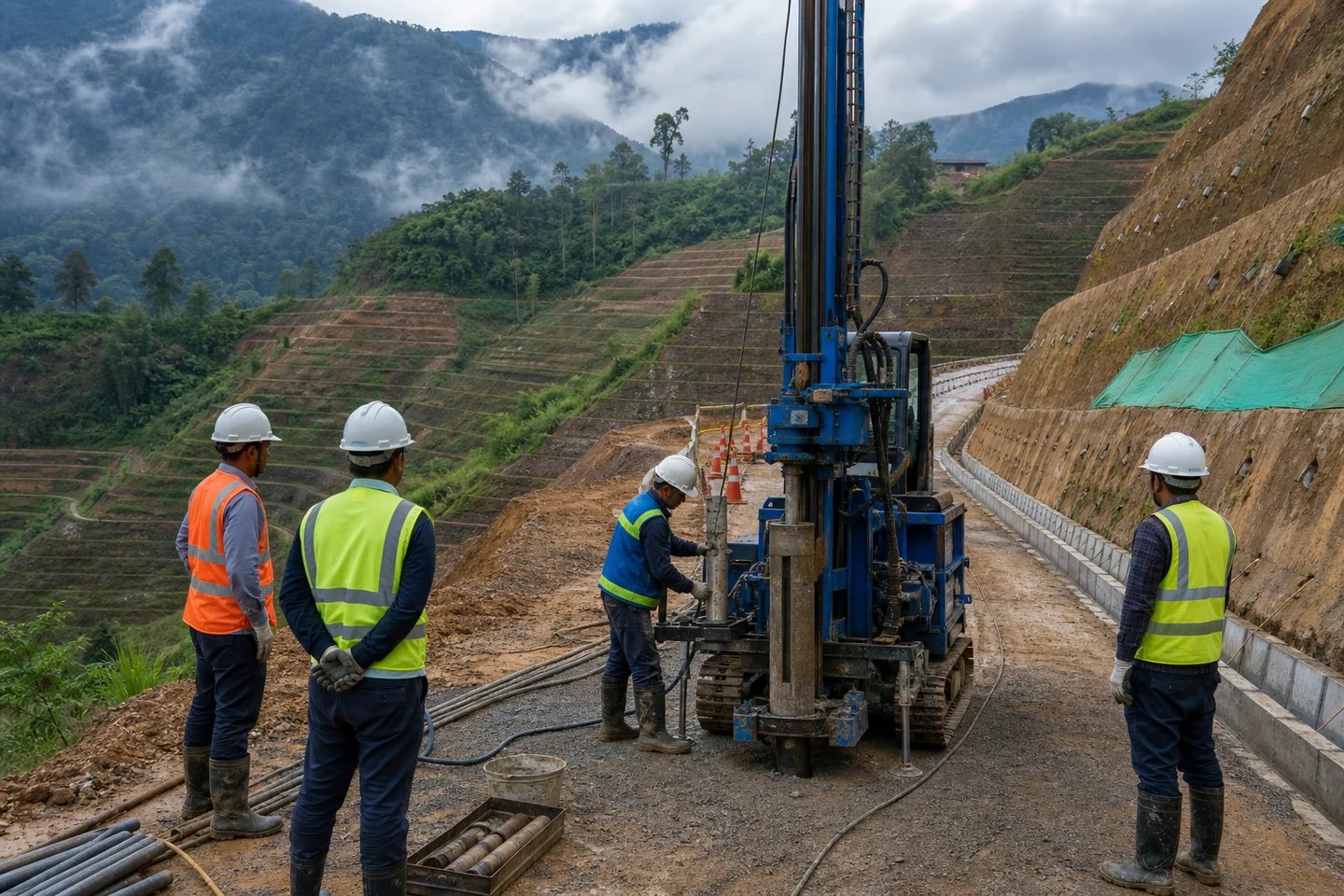
Geotechnical rig and protected field team on a terraced mountain road corridor.

Controlled practice

Useful evidence has a stated source, method, and limit.

Source
Field position, sample condition, and test record remain traceable.
Review
Evidence is checked against the decision before a scope is fixed.
Boundary
Natural variability and conditions between observations remain explicit.

Method

A short, controlled project process.

  1. DiscoverConfirm the decision, records, constraints, access, and review date.
  2. PlanSet locations, methods, sampling, testing, monitoring, and hold points.
  3. AnalyseReview observations, sample quality, laboratory results, and ground-model confidence.
  4. ReviewCompare evidence against the project question and clarify limitations.
  5. HandoverIssue the factual record, interpreted findings, and decision-ready next steps.

Inquiry

Assemble a preliminary engagement brief.

Start with the decision context and evidence already available.
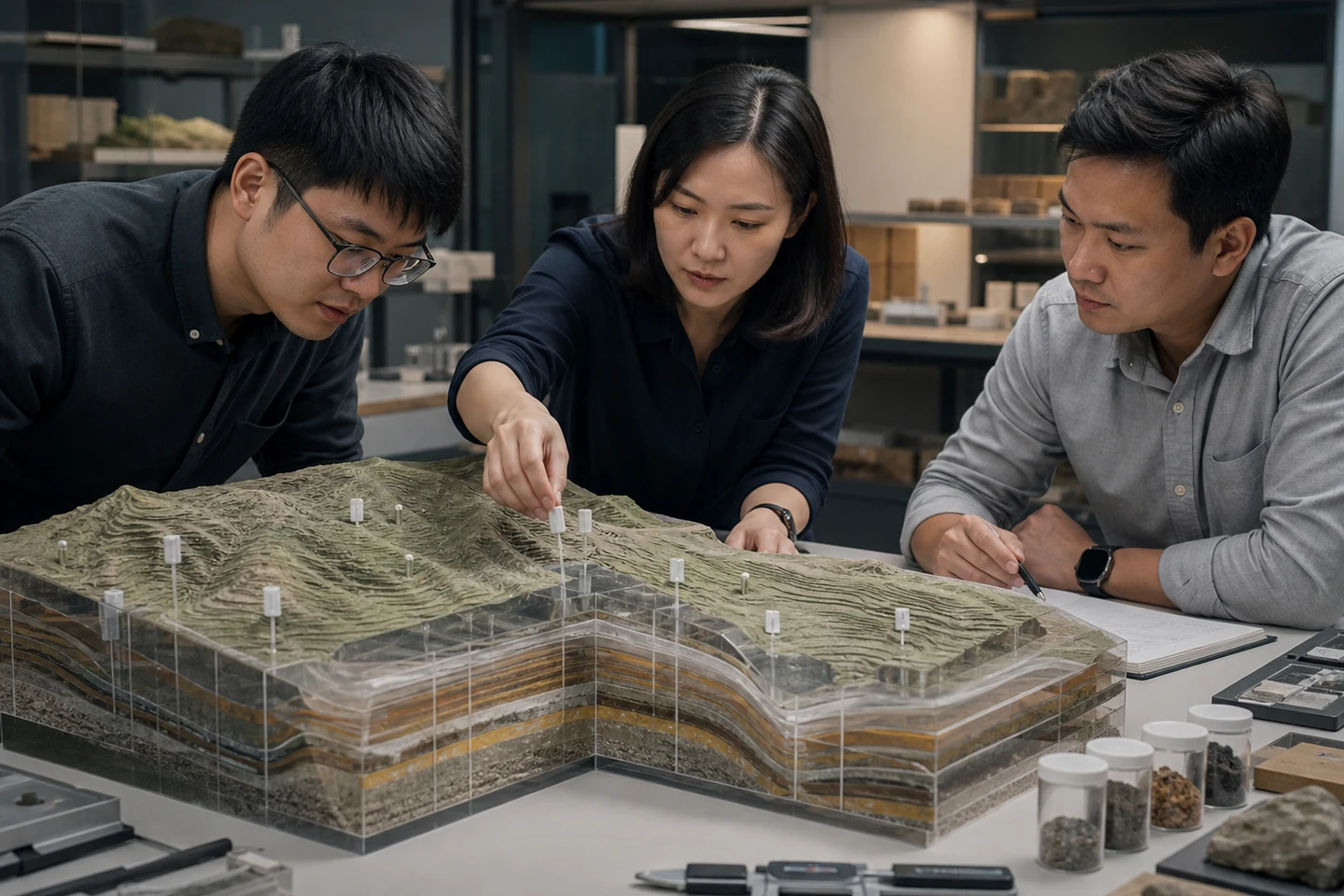
Three engineers review a layered terrain model with borehole markers.
Prepare a preliminary engagement brief