Ventilated civic edge
MaterialLK VENT 90
FitCovered circulation, shaded libraries, community rooms
VerifyWind pressure, fall protection, span, reinforcement, drainage
A masonry unit does not resolve the building alone. Use, span, support, moisture, movement, access, and maintenance decide whether the detail is credible.
The comparison changes scale, not truth. Final color, joint, opening, fixing, and weathering need a project mock-up.

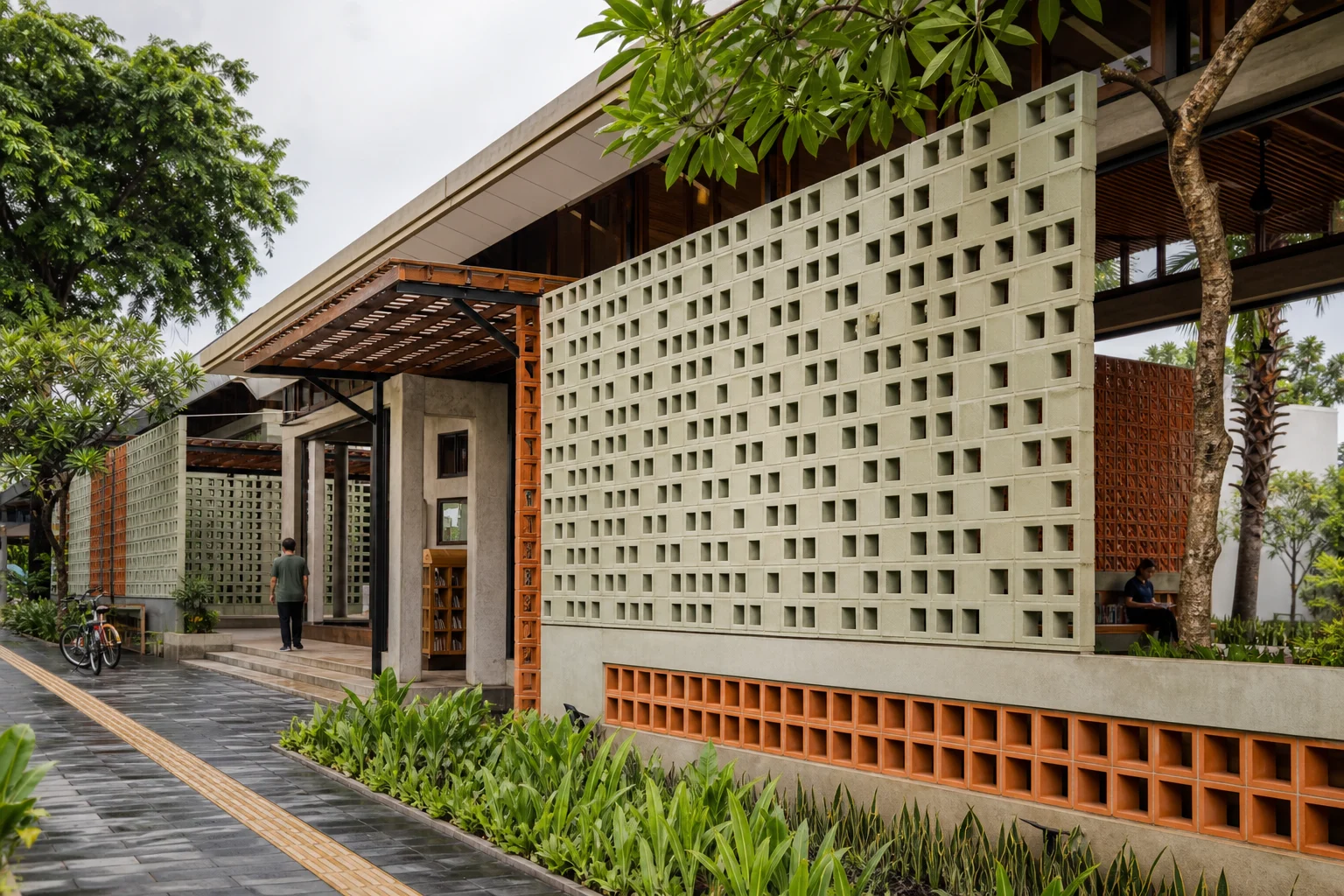
MaterialLK VENT 90
FitCovered circulation, shaded libraries, community rooms
VerifyWind pressure, fall protection, span, reinforcement, drainage
MaterialLK GROUND 120
FitBack-of-house walls, utility rooms, protected exterior walls
VerifyLoads, moisture exposure, fire strategy, acoustics, mortar
MaterialLK SCREEN 65
FitWorkplace dividers, hospitality thresholds, gallery partitions
VerifyImpact, fixing, egress width, cleaning access, edge detail

Wind, structure, fire, acoustics, moisture, fall protection, movement, and local code remain project responsibilities. The specification page makes those boundaries explicit.
Review specifications and limits