LOOP KILN
01Company02Materials03Applications04Specifications05Making06Plan
04 / MAKING

A process you can inspect, not a green story.

Every loop has a boundary. Inputs, forming, curing, tests, rejects, and dispatch are recorded as separate decisions; reclaimed material returns only where the approved recipe permits.
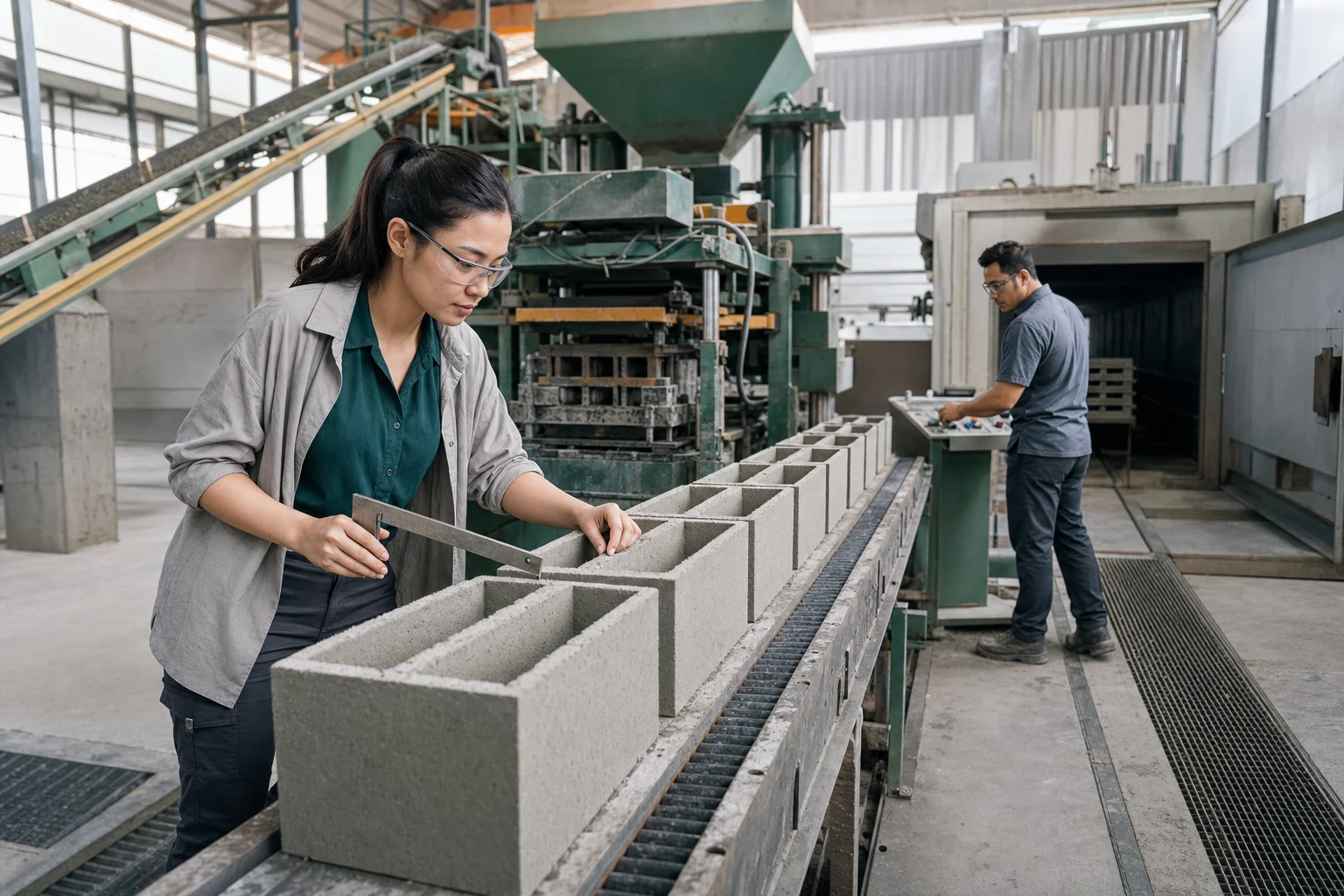
A production engineer checks freshly formed masonry units moving toward the curing chamber.
01

Receive

Mineral inputs and reclaimed ceramic fines are segregated by source and moisture condition.

02

Blend

The approved batch recipe controls grain balance, color family, and workability.

03

Form

Precision moulds compact each unit; edges and openings are checked at the line.

04

Cure

Controlled curing replaces a decorative kiln narrative; time and moisture remain process variables.

05

Verify

Dimensional checks and scheduled material tests create the batch record used for project review.

06

Return

Offcuts and selected clean rejects return to controlled material streams where the recipe allows.
INPUTBLENDFORMCUREVERIFYRETURN
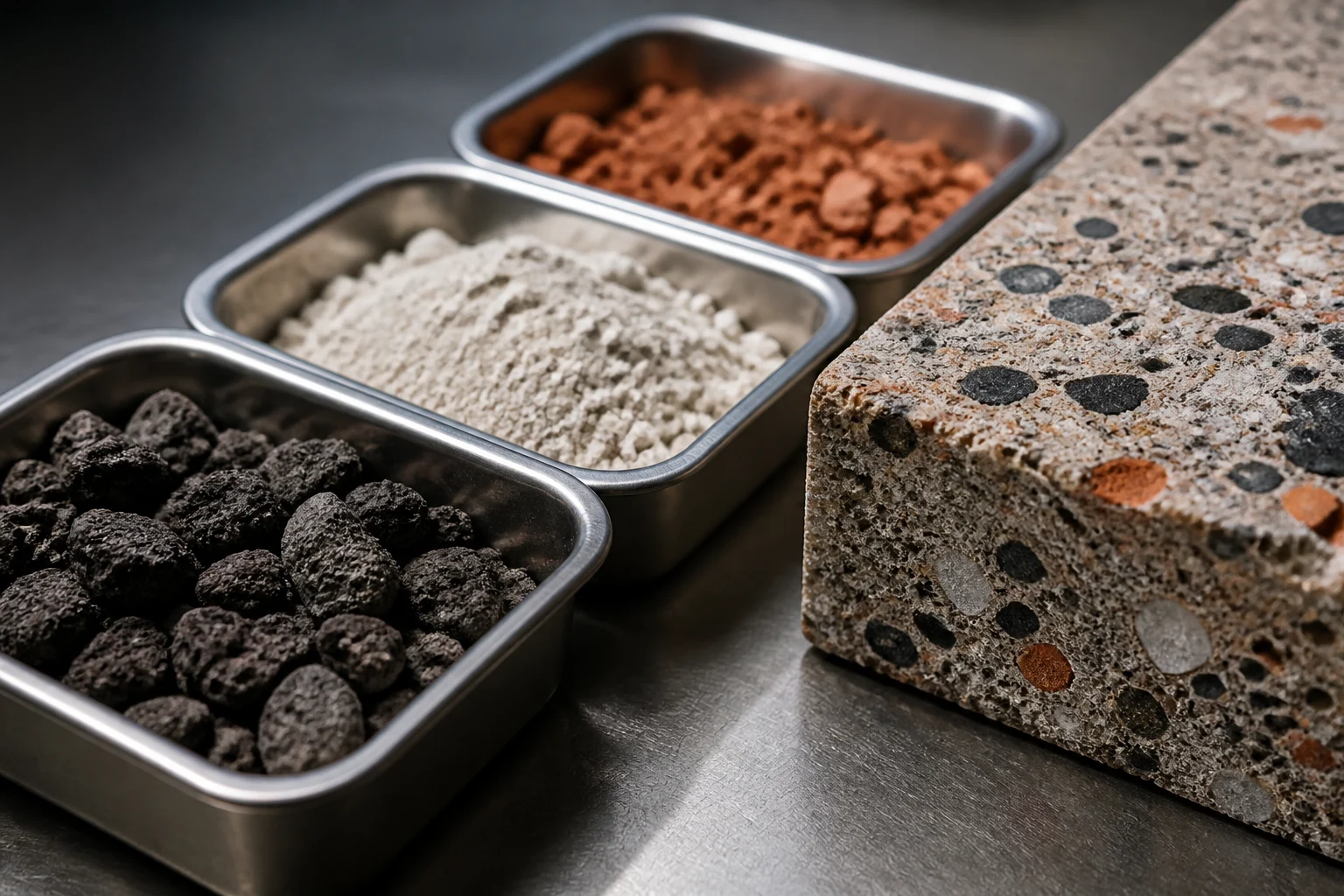
Volcanic aggregate, limestone fines, reclaimed ceramic, and a cut masonry cross-section on a test bench.
Material intake separates grain types and moisture conditions before an approved batch is blended.
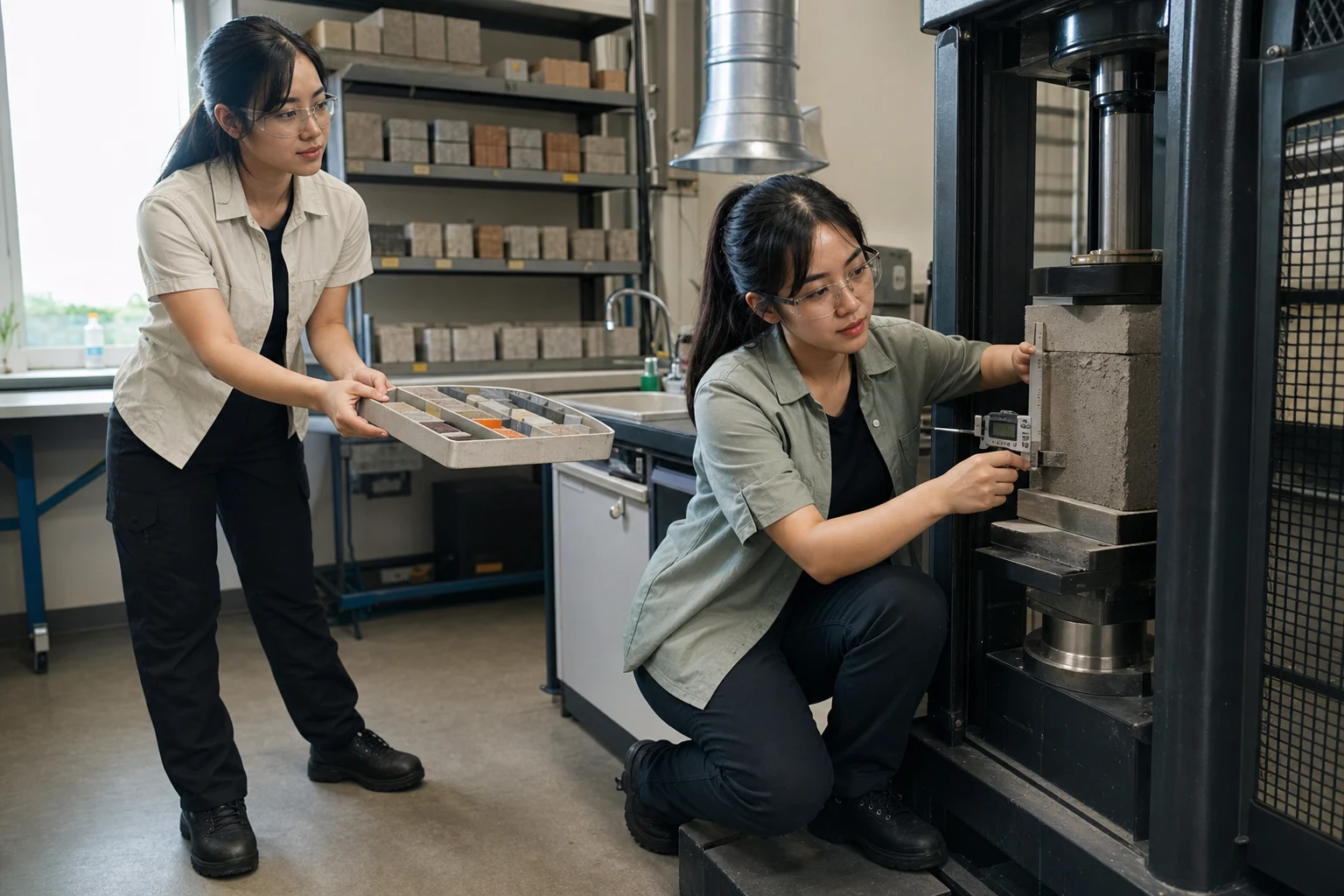
Two materials engineers prepare a masonry coupon for dimensional and compression testing.
Dimensional and material checks connect production state to the project review desk.
Palletized masonry units line a rain-fresh dispatch lane beside the Loop Kiln production building.
Loop boundary / dispatchReusable handling systems matter, but delivery distance, pallet count, breakage, and return logistics still belong in the project calculation.